Rendered from the repository — the file stays the source of truth.
Process view — runtime dynamics
Status: Snapshot as of 2026-08-18 (session C5). Describes the merged runtime paths: grounded chat (PR #24 A4), ingestion (PR #15 A3), auth/session (PR #10 A2). D2 (audio overview) is adding a second async pipeline in flight — not covered here.
Correction (2026-08-18, session C8): D2 merged the same day (PR #27). Its pipeline deliberately mirrors the ingestion sequence below — pending →
after()→ processing → script LLM → TTS → service-role upload → ready, failures → failed with a user-safe message, the same 2.5 s polling — with guards of ≤1 concurrent generation and ≤20 artifacts per notebook; record inproduct/history/webapp.md. A6 (PR #49) also added one step to the grounded-chat request: a per-notebook daily quota is asserted before retrieval, so a capped notebook answers HTTP 429 without any token spend.
The grounded-chat request
The product’s defining loop (CF-05/06/07), end to end
(apps/webapp/src/app/notebooks/[id]/chat/route.ts):
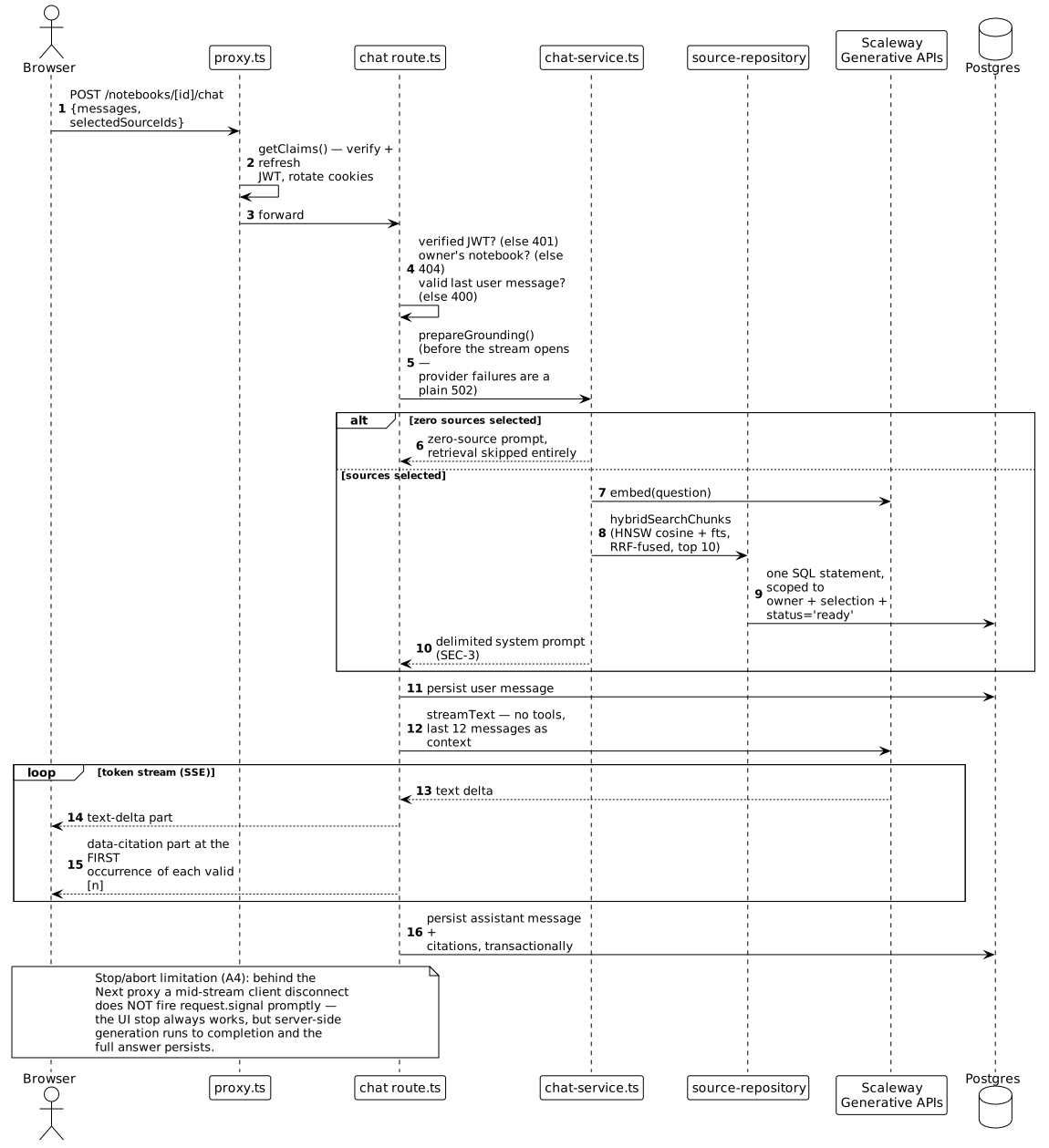
Diagram source: product/architecture/diagrams/process-grounded-chat.puml.
What gets persisted is what the user actually saw — full or stopped-early — so a reload matches the transcript.
The model’s-eye version of this sequence — which models are called at each step, with the retrieval tuning values and the no-spend paths — is in the generative view (added 2026-08-18, session C9).
Documented stop/abort limitation (A4 gotcha, verified with
instrumentation; comment in the route): behind the Next proxy, a mid-stream
client disconnect does not fire request.signal promptly. The UI-level
stop always works, but server-side generation then runs to completion
(~one answer of token spend) and the full answer persists, while the
stopped client shows the truncated view until reload. An explicit
client→server abort beacon was judged out of MVP proportion
(handovers/2026-08-18-session-a4-grounded-chat.md).
Conversation state is deliberately minimal (CF-08 MVP): one conversation
per notebook, created on first message; clear-chat deletes it and the next
message starts fresh (chat-service.ts). History sent to the model is the
client-supplied message list, windowed server-side — server-side
reconstruction was considered and deferred (A4 handover, open questions).
The ingestion pipeline
Feasibility D-2 stage 1: parse → chunk → embed runs in-process in
the Next container, detached from the request via Next’s after(). Job
state is the sources.status column from day one — no queue, no worker
(yet; stage 2 moves the same code into a Scaleway Serverless Job without
touching schema or UI).
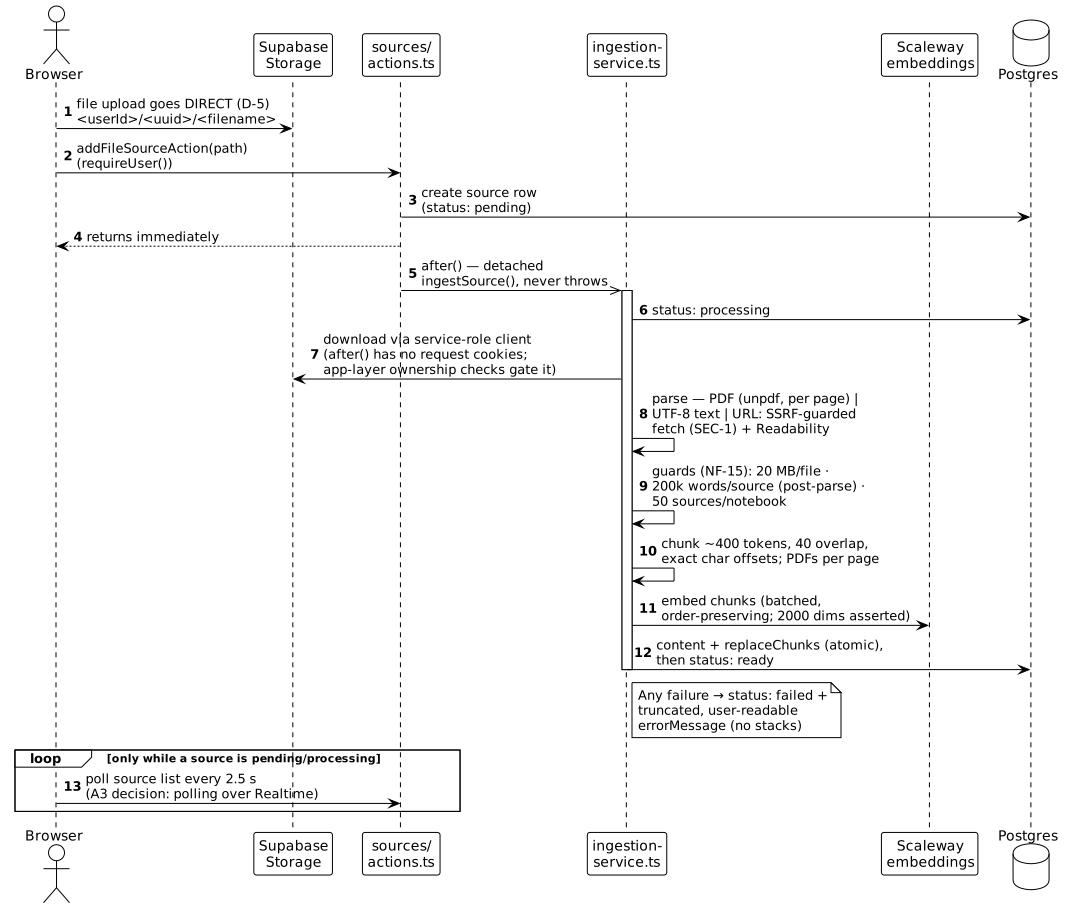
Diagram source: product/architecture/diagrams/process-ingestion.puml. The
2.5 s polling (over Realtime) is an A3 decision — fewer moving parts at
in-process durations; revisit at stage 2.
Session refresh (proxy)
apps/webapp/src/proxy.ts (Next 16’s renamed middleware) runs on every
non-static request and does exactly two things:
- Token refresh:
supabase.auth.getClaims()cryptographically verifies the JWT and refreshes it when close to expiry; rotated cookies are written onto both the current request and the response. - Optimistic redirects via the pure
redirectTarget()(src/lib/auth/route-access.ts): unauthenticated →/login, authenticated on auth screens →/.
The proxy is never the authority — every page, action, and route
handler re-validates via requireUser() / getAuthenticatedUser()
(src/server/auth.ts), so a matcher change cannot open a hole.
Concurrency realities
- In-process
after()ties ingestion to the container’s lifecycle: it shares CPU/memory with request handling, and a crash mid-parse affects that one source (status staysprocessing/flipsfailed— SEC-2 records the parser-bomb exposure and names D-2 stage 2 as the structural fix). - Scale-to-zero: the container runs
min_scale = 0,max_scale = 2(infrastructure/main.tf); cold start measured at 3.89 s TTFB (spike S-1,product/feasibility.mdrisk register). Two instances can run — nothing in the current paths assumes a single process (job state is in Postgres, sessions in cookies), but there is no cross-instance coordination either: the same source could be re-ingested concurrently in principle;replaceChunkskeeps the outcome consistent. - Guard limits, not rate limits: the ≤N guards (20 MB, 200k words, 50 sources) cap size, not request rate — an authenticated user can hammer embedding/chat token spend. Known and accepted as SEC-7; per-user rate limits are a before-public-exposure item.
- One conversation per notebook means concurrent chat requests to the same notebook interleave messages into one history — acceptable single-user behavior (CF-08 MVP).